Tax Time Doesn’t Have to Hurt: Automating Your Workshop Write-Offs
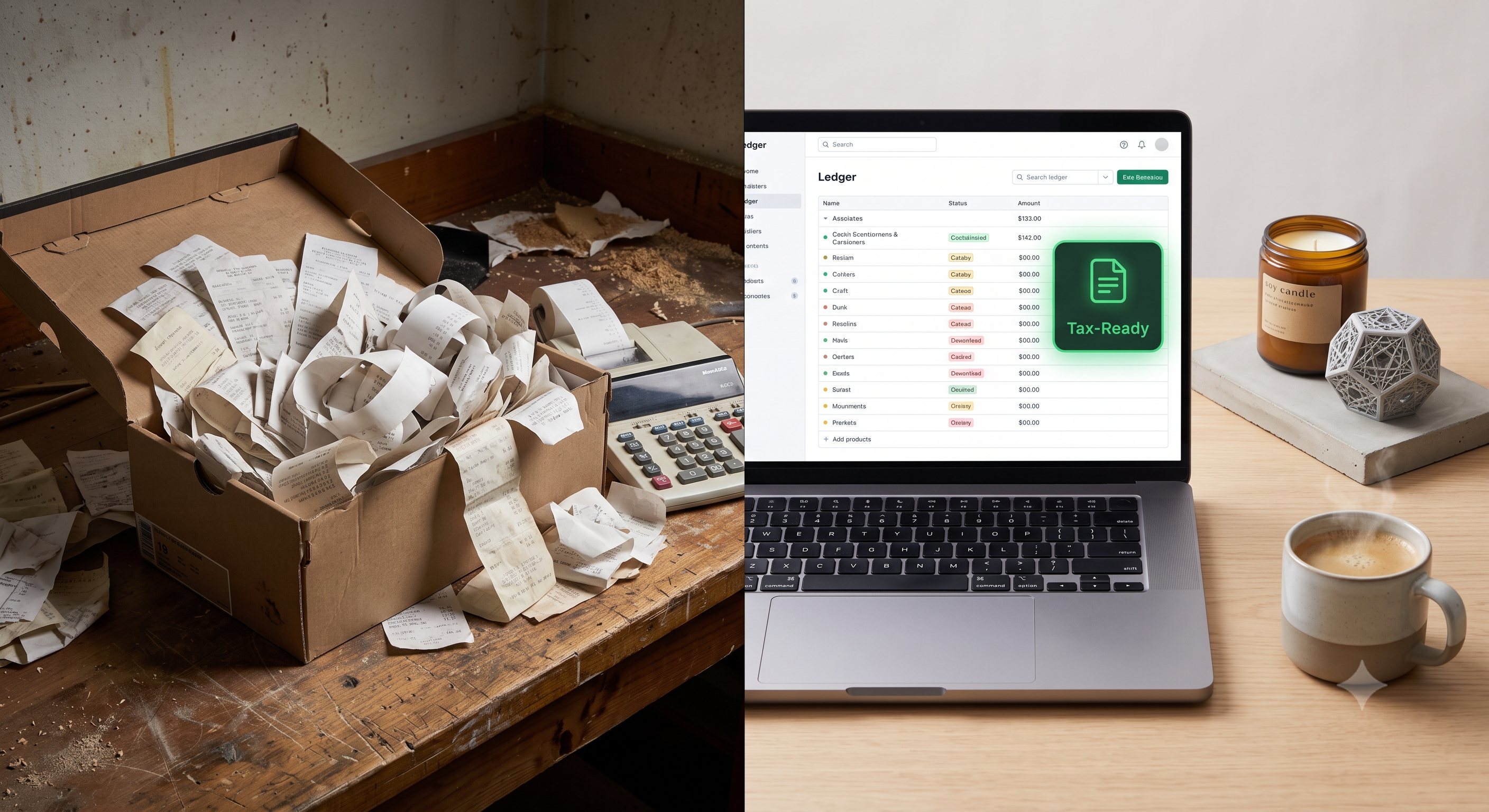
Ah, April. The month where workshop creativity grinds to a sudden halt, and we all transform into highly stressed, amateur accountants.
If you are anything like I was a few years ago, your tax preparation strategy probably looks something like this: You open a blank Google Sheet, pull out a shoebox full of faded thermal receipts, export five different CSV files from Etsy, Shopify, and Square, and spend an entire weekend trying to piece together where your money actually went.
When you are manufacturing physical products—whether you're pouring custom concrete candles or running a 3D print farm—standard bookkeeping templates just don't cut it. You aren't just tracking "office supplies." You are tracking raw materials, machine wear-and-tear, and carrying inventory.
Here is why your current tax process is so painful, and how you can automate your write-offs so you never have to scramble in April again.
The "Catch-Up" Bookkeeping Trap
The biggest mistake makers make is treating bookkeeping as an annual event rather than a daily habit. When you wait until tax season to log your expenses, you inevitably lose money.
Did you remember to write off that $15 roll of thermal labels you bought in February? What about the emergency spool of filament you picked up in July? When you rely on memory and a chaotic pile of receipts, you miss hundreds of dollars in legitimate business deductions, which means you end up paying more to the government than you actually owe.
COGS vs. Operating Expenses (The Spreadsheet Nightmare)
Tax authorities want to know your Cost of Goods Sold (COGS). But calculating this manually is a nightmare.
Let's say you buy 50 lbs of soy wax. In a spreadsheet, you just log that as a single expense. But what happens at the end of the year when you still have 15 lbs of that wax sitting on a shelf, unsold? Technically, that is un-depleted inventory valuation, not a realized expense. Trying to manually separate your raw material purchases from your actual COGS at midnight on April 14th is exactly why makers hate taxes.
The Missed Equipment Depreciation
If you run a 3D print farm or use a CNC laser cutter, your machines are constantly degrading. Nozzles clog, belts snap, and laser tubes die. This wear-and-tear is a massive tax write-off, but because spreadsheets are blind to the physical lifecycle of a machine, most micro-manufacturers completely forget to claim asset depreciation on their taxes.
Stop the April Panic
You shouldn't need an accounting degree to run a creative business.
I got so sick of the tax-time scramble that I decided to build financial automation directly into the manufacturing process. That is why Vercos ERP features built-in, localized tax logic right out of the box.
When you log a production batch in Vercos ERP, the system doesn't just deduct the materials from your shelf. It automatically calculates the fractional cost of those materials and logs it directly into your financial ledger. It tracks your machine depreciation. It organizes your overhead.
Whether you need to file a Schedule C in the United States or a T2125 in Canada, Vercos ERP tracks your business deductions automatically as you operate, not after the fact. You (or your CPA) can simply log in, pull the tax-ready ledger, and be done with it.
If you are ready to reclaim your weekends and stop dreading tax season, it's time to build a smarter workshop.
**TL;DR: **
-
Manual bookkeeping and "catch-up" data entry at the end of the year cause craft businesses to miss hundreds of dollars in valid tax deductions.
-
Standard spreadsheets struggle to separate bulk raw material purchases from realized Cost of Goods Sold (COGS) and un-depleted end-of-year inventory valuation.
-
Makers operating machinery (like 3D printers) frequently miss out on valuable asset depreciation write-offs due to disconnected tracking systems.
-
Vercos ERP automates localized tax prep (including US Schedule C and Canadian T2125) by tracking fractional material usage, COGS, and operational expenses in real-time as production occurs.