The 'Oversold' Nightmare: Why Your Inventory Sync is Failing (And How to Fix It)
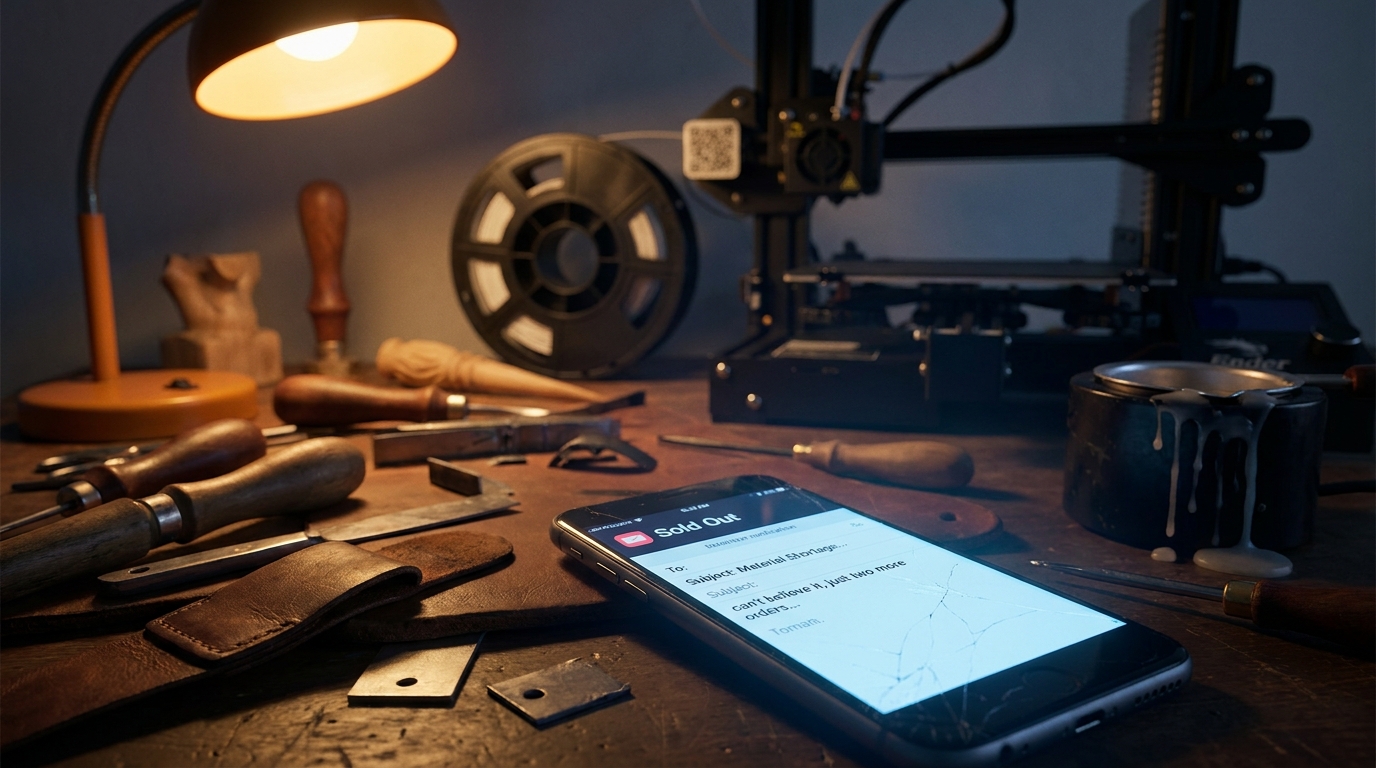
The Email of Shame
It’s 9:00 PM on a Tuesday. You just got that satisfying cha-ching from your phone—another Etsy sale. Then, thirty seconds later, a Shopify notification for the same item.
You walk over to your shelf. Your heart sinks. You only have one unit left.
You’ve been oversold.
Now comes the "Email of Shame." You have to message a customer who was excited to support your craft and explain that you don’t actually have what they bought. It’s unprofessional, it’s draining, and if it happens too often, Etsy’s algorithm will bury you in the search results faster than you can say "out of stock."
As makers, we’re often told that the solution is a "syncing tool." But if you’re still ending up in the red, it’s because most inventory tools are passive lists—not active manufacturing engines.
Let’s talk about why you’re actually overselling and how to fix it using a little bit of engineering logic.
The Surface Problem: The Sync Lag Window
Most makers start by selling on one platform (usually Etsy). When you add Shopify or Faire, the math gets messy.
Basic inventory trackers like Craftybase or Inventora work on a "push/pull" system. When a sale happens on Etsy, the software notices it, waits a few minutes, and then tells Shopify to update its numbers.
The Problem: In those three minutes of "sync lag," a second customer can buy the same item. If you’re running a flash sale or a product launch, that three-minute window is a lifetime.
The Artisan-Engineer Fix: You need a "Safety Stock" buffer. Never list 100% of your physical inventory online. If you have 10 candles, list 8. That 2-unit buffer acts as a mechanical fuse, protecting you from the lag of the API sync.
The Deep Problem: The Material Gap (The "Invisible" Oversell)
This is where most "inventory management" software fails you. They track finished goods, but they don’t track your capacity to create.
You might have 0 finished units of your "Midnight Jasmine" candle, but you’ve left the listing active because you "know" you have the materials to pour more tomorrow.
Then you check your fragrance oil jug. You thought you had 16oz left. You actually have 1.5oz because you forgot to account for the waste from the last batch.
You are now oversold on materials.
Why This Happens in Specific Niches:
- Candle Makers: You’re tracking bottles, not grams. You don't realize you're below the "critical mass" needed for a full batch until you're already pouring.
- 3D Printing Studios: You track spools, but not "spaghetti waste." You think you have 200g left on a spool—enough for that custom commission—but 50g went into a failed support structure. You run dry at 3 AM mid-print.
- Soap Makers: Your "Loaf-to-Bar" math doesn't account for the curing window. You sell a bar that technically exists, but it hasn't reached its safe pH level yet. You've oversold your available stock, even if the physical stock is sitting on a shelf.
Moving from Passive Tracking to Active Deduction
At Vercos ERP, we didn't build a digital tally sheet. We built a Fractional Deduction Engine.
When we say we track inventory, we don’t just mean we count your boxes. We mean we track the fractional gram of wax, the milliliter of essential oil, and the exact gram of filament pulled from a spool.
How an 'Active' System Stops Overselling:
- Real-Time Material Depletion: As soon as you log a production run, Vercos deducts the exact amount of raw materials used. If a 3D print fails, you log the waste, and your "Available to Print" capacity updates instantly.
- The Manufacturing 'Brain': Vercos knows your recipes. It can tell you, "Based on your current fragrance oil levels, you can only fulfill 4 more orders of this scent," even if you haven't poured them yet.
- Low-Stock Triggers (The Early Warning System): Instead of waiting until you're out, you set triggers at the component level. If your favorite 12oz glass vessels drop below 24 units, Vercos flags it as a 'Critical Shortage' before you even think about opening your Shopify admin.
Stop Guessing, Start Engineering
Overselling is a symptom of information rot. It happens when your digital records don't match the physical reality of your workshop floor.
If you’re tired of the "Email of Shame," stop using a passive list. Use a tool that understands the physics of making. Vercos ERP was built to handle the fractional, messy, high-waste reality of artisan manufacturing so you can stop worrying about your stock levels and get back to the craft.
Ready to bridge the gap between your shop and your shelf? Try Vercos ERP for free and see what it’s like to have a manufacturing brain that never forgets a gram.
TL;DR Summary
- Basic inventory sync tools often suffer from API lag, creating a window where two customers can buy the final unit of stock simultaneously.
- Standard software tracks finished goods but fails to monitor the raw material capacity needed to fulfill backorders or new production runs.
- The 'Safety Stock' buffer is a critical manual fix where makers list only 80-90% of physical inventory to account for sync delays.
- Advanced manufacturing engines like Vercos use fractional deduction to track every gram of material, including waste and failed production runs.
- Overselling damages your reputation and search rankings on platforms like Etsy, making active material tracking a business necessity.